

Accessible Tourism in the New EU Sustainable Tourism Strategy - ENAT's Priorities
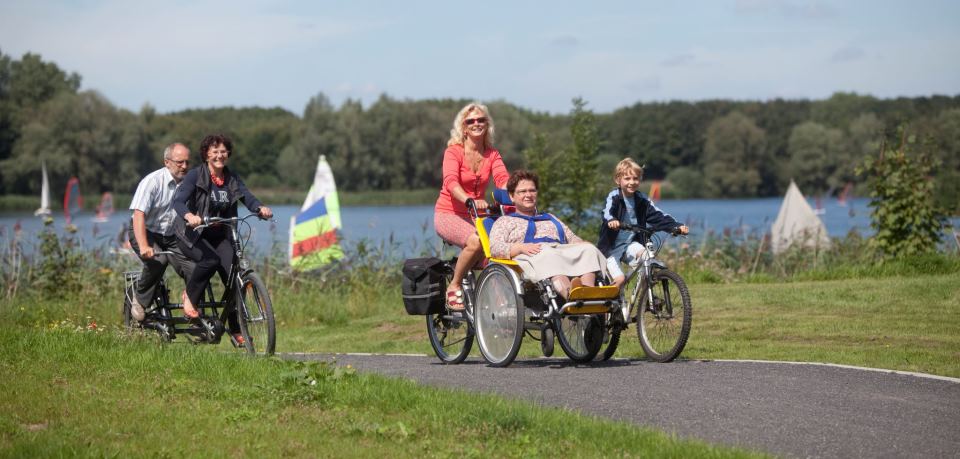 Friends enjoying a cycling tour together with a tandem and an adapted wheelchair bike. Photo: VisitFlanders
Share on social media
The European Commission plans to launch its new tourism strategy in the summer, 2026. ENAT sets out the case for investing in Accessible Tourism as a driver of higher service quality, benefitting the industry, communities and tourists.
Accessible Tourism in the EU Sustainable Tourism Strategy
Following the High-Level Strategic Dialogue with Commissioner Tzitzikostas, Brussels, 25 February 2026.
Investing in Accessible Tourism is critical to the future of the European tourism industry.
Tourism demand in Europe is inevitably shaped by the needs of human diversity, in terms of visitors’ ages, abilities, health conditions, changing access needs and travel preferences.
Seniors make up a significant and growing part of the tourism market. This age cohort, and visitors with disabilities who both need good access, travel throughout the year - often with friends and family, stay longer, spend more per trip, and when satisfied, make more return visits than the average tourist.
Good access benefits all visitors by ensuring comfort, safety and higher quality.
Considering these facts, integrating accessibility in the European Sustainable Tourism Strategy will contribute directly to improving the quality, resilience and competitiveness of the European tourism ecosystem.
Accessibility is often framed, mainly, as part of social inclusion policies, without recognising its great potential for increasing competitive advantage, stimulating economic growth and supporting sustainable tourism development, as documented in the EC DG Enterprise and Industry Report of 2014, Economic Impact and travel patterns of accessible tourism in Europe – Final report.
To unlock this potential, the Strategy should focus on three priorities:
1. supporting the implementation of the European Accessibility Act and relevant accessibility standards in the tourism sector;
2. increasing investments in accessibility through targeted incentives and support measures which will raise the quality of tourism offers and deliver return on investment;
3. improving knowledge transfer and raising skills in accessibility across the tourism workforce, through initiatives such as the Pact for Skills and EU Tourism Academy.
Accessibility, which ensures equal participation and enjoyment of tourism by all visitors, must be considered as a fundamental enabling factor across the tourism value chain.
“Good access for all” contributes directly to several key objectives of EU tourism policies by:
• contributing to the sustainability of tourism infrastructure and services
• fostering usability of tourism information systems and digital services
• building resilience of tourism destinations, leveraging the wider market
• stimulating competitiveness of the European tourism ecosystem.
 A group of friends on a city tour. Photo: Xun Ji.
In practice, accessible tourism requires a Universal Design approach for tourism services, products, environments and information, supporting social inclusion, benefitting all visitors and the host communities.
“Accessibility should be achieved by the systematic removal and prevention of barriers, preferably through a universal design or ‘design for all’ approach, which contributes to ensuring access for persons with disabilities on an equal basis with others.”
- European Accessibility Act
Tourism operators and Destinations require guidance, incentives and support mechanisms to achieve accessibility measures effectively in practice.
The European Accessibility Act and related EU regulations and accessibility standards provide a regulatory framework and tools supporting the implementation of accessibility in the tourism value chain, including:
• transport and passenger rights
• package travel
• ICT, Web accessibility and digital services, e-commerce
• the built environment
• employment of persons with disabilities.
The EU Sustainable Tourism Strategy should support greater awareness, understanding and uptake of relevant access standards, aligning with the initiatives of the AccessibleEU Resource Centre and UN Tourism, by helping tourism businesses and destinations implement accessibility requirements both in their workforce and their tourism offers.
However, the economic return on investment in accessibility remains insufficiently documented and recognised across parts of the tourism sector.
What is measured supports decision-making
Measurement is the first step to obtain clear evidence that can guide the way ahead. The EU Sustainable Tourism Strategy should seize the opportunity to begin systematic data collection on accessibility demand and supply of accessible tourism services, to inform tourism stakeholders and support policy-makers’ decisions.
Areas for the development of relevant indicators could include:
• investments in accessibility improvements
• user access needs and user satisfaction
• impacts on visitor flows and seasonality
• economic return on accessible tourism investments.
Skills and capacity building
Skills are central to the effective implementation of accessibility. The new tourism strategy should support the integration of Universal Design principles into tourism training programmes and professional education initiatives targeting tourism businesses, SMEs, destination management organisations and public authorities.
This effort could build on existing EU initiatives such as the Pact for Skills for Tourism, and Erasmus plus funded projects, encouraging the inclusion of accessibility and Universal Design as core competencies within tourism workforce development.
Accessibility should therefore become a core competence across the tourism workforce.
Synergies with AccessibleEU
The AccessibleEU Resource Centre, launched by the European Commission, represents an important initiative supporting the implementation of accessibility legislation. Transport accessibility already represents a key pillar of AccessibleEU.
ENAT sees a strong opportunity to strengthen the role of tourism within this initiative, if it is renewed beyond 2026. For example by targetting:
• guidance and training for the tourism sector on implementing access measures
• mutual learning and dissemination of best practices among tourism destinations
• support tools for tourism SMEs.
Such synergies would increase the visibility and practical impact of accessibility within EU tourism policy.
Conclusion
Accessibility represents a strategic opportunity for European tourism.
By integrating accessibility more strongly into the EU Sustainable Tourism Strategy, the European Union can simultaneously:
• improve the quality of tourism services for all visitors
• support the digital transition
• strengthen destination resilience
• enhance the global competitiveness of 'Destination Europe'.
Accessible tourism is quality tourism.
The European Network for Accessible Tourism (ENAT) stands ready to support the European Commission in advancing accessibility within EU Tourism policies and actions.
Download the text: "Accessible Tourism in the EU Sustainable Tourism Strategy" by ENAT from the Downloads section of this page in PDF format.
About ENAT
The European Network for Accessible Tourism is a non-profit association, founded in 2008 following a successful EC-funded pilot project on "Mainstreaming disability in the tourism sector”. It is a multi-stakeholder association of actors from across the tourism ecosystem, including destinations and public authorities (NTOs, DMOs, cities), educational institutions and user organisations representing persons with disabilities.
The mission of the European Network for Accessible Tourism is:
“...to make European tourism destinations, products and services accessible to all visitors, (considering the diversity of users and the increasing ageing population}, and to promote accessible tourism around the world”.
- ENAT addresses both the demand and supply sides of tourism, and provides a representative voice towards European policy-makers and organisations whose actions have a direct influence on the tourism sector, aiming to make Europe the most competitive accessible tourism market, globally.
- ENAT is committed to strengthen EU policies on combatting discrimination towards people with disabilities, leading to greater social inclusion, within the framework of sustainable tourism development.
- ENAT has made Commitments and Pledges for enhancing accessible tourism services under the EU Transition Pathway for Tourism, which it is fulfilling through numerous projects, initiatives and networking activities.
- ENAT is a Partner in the AccessibleEU Resource Centre, which supports the full implementation of the European Accessibility Act across all EU Member States.
- ENAT has established binding MoUs with UN Tourism, the ONCE Foundation, Blue Flag International and other partners, collaborating in the development of accessible tourism policies, standards and tools for public and private sector actors, globally.
- ENAT is a core member of the EU Tourism Manifesto Alliance
- ENAT is a member of the Active Tourism Coalition which calls on European institutions to recognise Active Tourism as a strategic pillar of sustainable, competitive, and resilient tourism across Europe.
Web: https://www.accessibletourism.org
Email: enat@accessibletourism.org
ENAT - European Network for Accessible Tourism a.s.b.l.
Grasmarkt 61 / Rue du Marché aux Herbes 61, 1000 Brussels, Belgium.
Company no. 0897.614.640
European Transparency Register: No. 7964210133-55