

Astana, The Capital City of Kazakhstan
 Aerial view of the City of Astana with tall modern buildings and the tall Baiterek Tower topped with a large golden globe.
Share on social media
Astana: A City Without Borders, creating an Accessible Environment for All.
Our city is a Member of ENAT and respects the ENAT Code of Good Conduct concerning accessible tourism facilities and services.
This page introduces you to the achievements of our city in the fields of accessibility, especially focussing on:
- accessible services,
- information,
- transport,
- architecture,
- education and
- tourism.
Yes, We Can!
Thanks to our years of experience and recent innovations, we truly believe that our city offers ideal conditions for disabled residents and visitors alike. We welcome you to visit us – for leisure, education or business.
Astana: A City Without Borders – How Kazakhstan's Capital Is Creating an Accessible Environment for All
Gleaming skyscrapers, soaring bridges, and spacious squares – Astana has long been a symbol of progress. But behind its futuristic appearance lies another, no less important story: Kazakhstan's capital is transforming into a city where equal opportunity is no longer an abstract idea. Here, infrastructure, culture, and services are designed to ensure that everyone – regardless of age, health, or disabilities – can feel like a fully-fledged resident or visitor. How does this work? We explore projects that are changing the perception of accessibility.
Numbers that speak for themselves
Astana is home to more than 41,900 people with disabilities – approximately 27,000 adults and 11,900 children. These figures have become the basis for systemic change. The city is not simply adapting; it is creating benchmarks of inclusiveness, combining technology, education, and social responsibility.
Award-winning medical support
The heart of the system is the National Children's Rehabilitation Center, the only one in Eastern Europe and Central Asia to receive the prestigious Joint Commission International accreditation. It annually provides care to 4,200 children with musculoskeletal disorders, hearing loss, and developmental delays. Doctors use innovative methods, and the medical equipment is comparable to the best international clinics. Modern medical centers operate nearby, synthesizing technology and expertise to support patients of all ages.
Transportation: Freedom of Movement as the Norm
Since 2014, Astana has been training drivers according to international standards for servicing passengers with limited mobility. The results are impressive: 91% of public transport (1,504 out of 1,648 vehicles) is equipped with ramps. This isn't just a figure—it means a stress-free way to get to work, school, or a city walk. And on buses and the metro, passengers with disabilities receive assistance that is thoughtfully designed down to the last detail.
Culture Without Borders
Seven museums in Kazakhstan, including the National Museum in Astana, are now open to all. Thanks to a UNDP project, audio guides in three languages, touchscreens, sign language screens, and tactile descriptions of exhibits in Braille have been installed. Staff have undergone special training to ensure each tour is comfortable. The National Museum has become more than just a repository of artifacts; it is a space for dialogue, where history is accessible even to those who cannot see or hear it in the traditional ways.
Astana Opera: A Masterpiece for Everyone
 Image of the Astana Opera House
Comparable to Milan's La Scala and Moscow's Bolshoi, this theatre is not limited to the stage. Its architecture is designed for inclusivity: convenient entrances, designated seating areas, and tactile signs. Here, everyone can enjoy a ballet or opera performance and then stroll through the foyer, admiring the panoramic view of the capital.
Five Routes to Equality
In 2025, Astana launched inclusive tourist routes—a true breakthrough in accessible tourism. Each route is a carefully crafted story:
- Nurzhol Boulevard—a stroll from the Baiterek Monument past glass towers and fountains.
- Botanical Garden—a natural oasis with tactile exhibits and barrier-free trails.
- Independence Square—a journey through the country's symbols, from the Presidential Park to monumental museum complexes.
- Old Town—cozy streets where buildings from the Tsarist era and Soviet Art Nouveau have been preserved.
- Arbat and the Yesil Embankment—a synthesis of street art and picturesque river landscapes.
The routes adhere to the principles of universal design and allow for both solo and guided exploration.
Together for a Common Future
 Riverside promenade
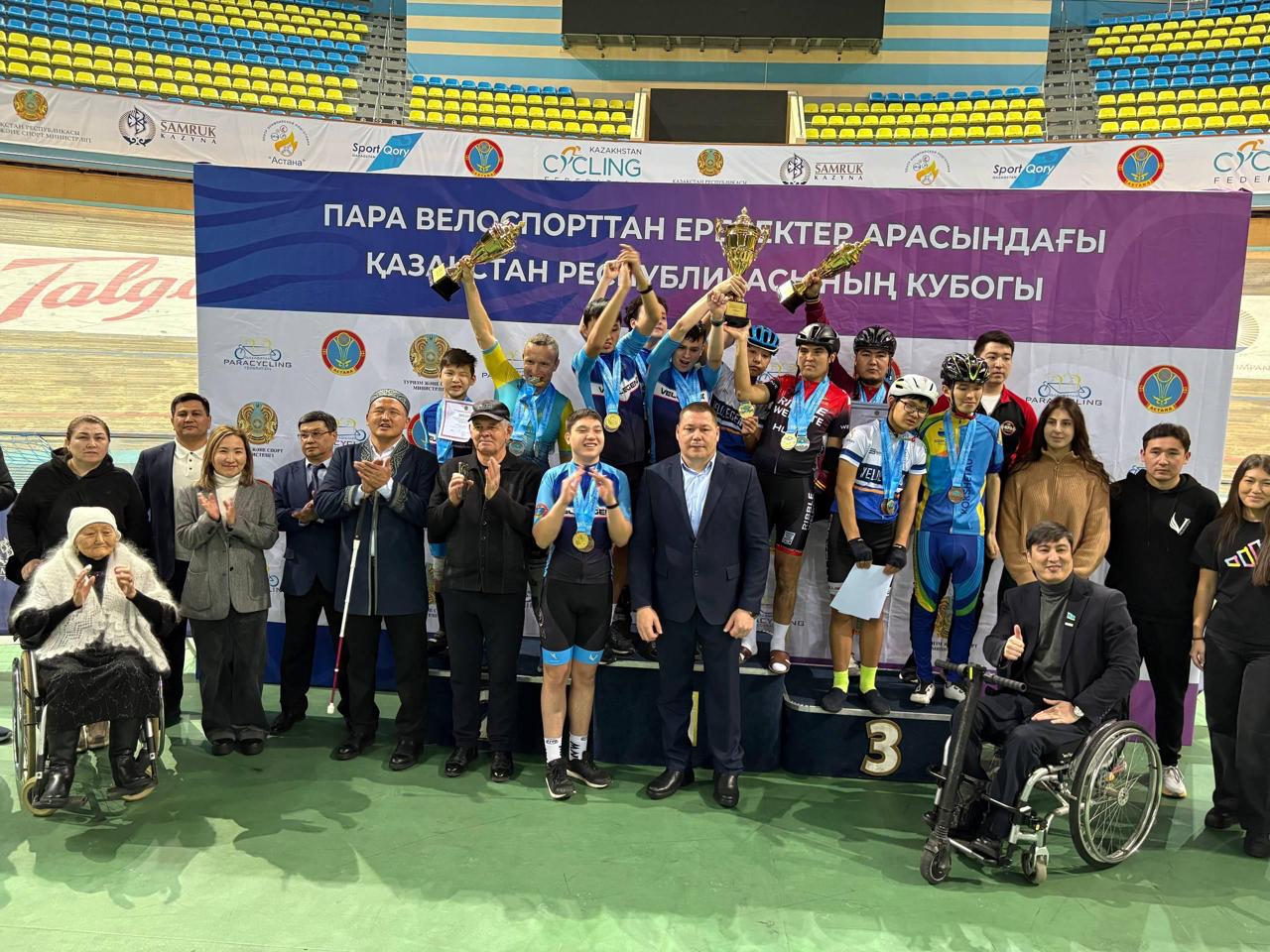
Paralycling team celebration at the Velodrome
As experts note, Kazakhstan's capital is already setting a trend for the entire region—a trend where architecture, technology, and culture serve not just for impressions, but for people.
"We want everyone to feel comfortable in Astana, regardless of their physical abilities," they say here. And these words come to life in every ramp, audio guide, route, and the smile of a helpful guide.
Astana proves that accessibility isn't about privileges but about a natural right to participate in the life of the city. Here, 200 employees of tourist attractions have been trained in inclusive service standards, and new projects are born in dialogue with people with disabilities.
Find Out More!
- Visit our website visitastana.kz
- Tourist Information Office visitastana.kz/information
- City Hall
- NGO partners: Disability associations and other citizens' organisations
- Chamber of Commerce
- Business partners.
Contact us:
You can contact us via this website visitastana.kz or by email, telephone or text telephone service.
Pass it on!
You can post this page to you social networking sites:
Instagram: @visitastana.kz